
Gutter Repair in Hilton Head, SC
In the Lowcountry, what looks like a minor gutter issue after a storm is often a system failure that’s been building quietly for months. We identify the real cause and explain what it means for your home.
Why Gutter Problems Get Worse the Longer They Sit in the Lowcountry
A homeowner in Wexford Plantation noticed a section of his rear gutter had started to sag after a stretch of heavy storms. He figured it was cosmetic — the gutter was still attached at both ends, and he didn’t see any overflow during light rain. By the time he called us, the sag had been sitting for about two months. When we got up there, the middle hangers had pulled completely out of the fascia board, and the wood behind them had been holding moisture long enough to start softening. What started as a hanger failure had become a fascia repair situation.
The gutter repair itself was straightforward. The fascia damage was the part that added time and cost — and it was entirely preventable if the sagging section had been looked at when it first appeared. That’s the pattern we see across older homes in Port Royal and Beaufort, and in communities like Indigo Run and Palmetto Dunes, where the combination of storm seasons and salt air puts steady pressure on hanger connections and seam integrity. A loose hanger doesn’t stay loose — it pulls, the sag deepens, water pools in the low spot, and the added weight accelerates failure in the hangers on either side. A small problem left alone in this climate doesn’t stay small.
How We Assess and Repair Your Gutter System
We get calls regularly from homeowners in Palmetto Dunes who say they just had their gutters cleaned and are still overflowing. Nine times out of ten, cleaning wasn’t the real problem. The gutters were installed years ago with improper pitch — sloped the wrong direction, or not sloped at all — so water sits, debris accumulates faster, and the hangers start to loosen under the weight. Eventually, the whole run starts pulling away from the fascia board.
One homeowner thought she had a roof leak. Water was showing up along her back wall after every storm. When we got up there, the gutters were sagging at the center of a long run, holding standing water that had nowhere to go except back up under the drip edge. The repair she expected turned into a full rear gutter replacement — but once the new system was in with the correct slope and properly spaced hangers, the problem was gone for good. That’s why the installation method matters as much as material selection.
This pattern repeats itself across older homes in Port Royal, Moss Creek in Bluffton, and along the Okatie corridor. Sectional gutters installed years ago develop leaks at every seam, especially after a few hurricane seasons. Salt air accelerates corrosion at those joints faster than you’d see anywhere inland — which means systems that might last 25 years in the Upstate start showing real problems here in 10 to 12. Knowing that changes how we spec every job, ensuring that every fix meets NRCA standards.
If you’re seeing overflow or water damage along your foundation, give us a call at (843) 310-0288 — we’ll find the real cause.
Why Lowcountry Homeowners Call Carolina Seamless Gutters
We’re locally owned, and we work across Hilton Head Island, Bluffton, Beaufort, and the surrounding communities. Webb, our owner, meets with customers directly, walks the job, and gives you a straight quote. There’s no handoff to a salesperson and no changes to the scope when the crew shows up — what we quoted is what you pay.
Here’s what one of our customers had to say after a recent job:
“Guys were on time, kept a super clean job site and did a fantastic job with our gutters and downspouts. The guys were incredibly nice and worked hard to get our gutters done right before tropical storm Debby hit. They even finished putting our leaf guards on in the rain. I would recommend this company if you need gutters, top notch service and quality products.” – Matthew B.
We fabricate replacement sections on-site when a full run needs to come out, which means the new piece is cut to your home’s exact dimensions and matches the existing profile as closely as the material allows. When we’re finished, we run a water test, do a full walkthrough to confirm everything is clean, and leave the property the way we found it.
Proudly Serving Hilton Head Island Communities
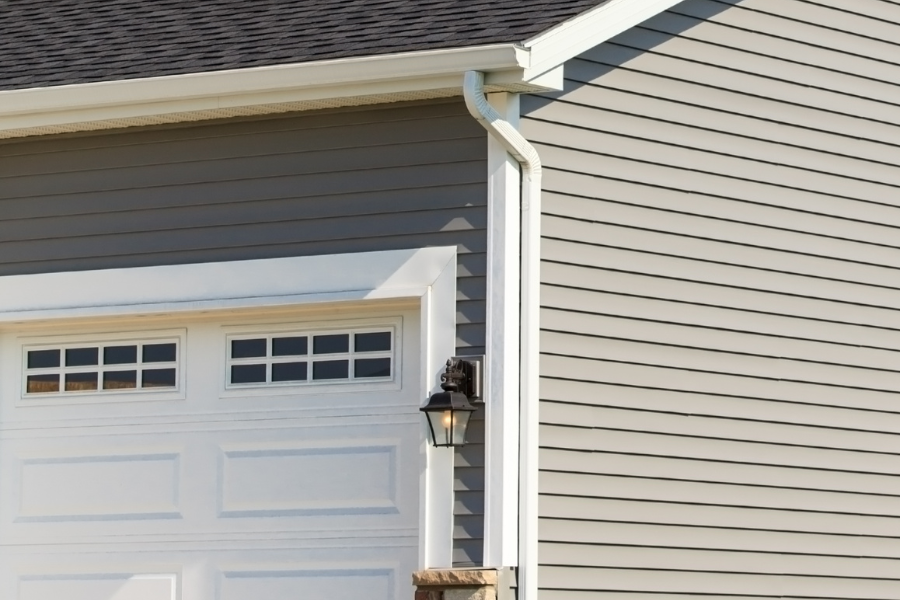
Carolina Seamless Gutters provides gutter and roofing services across Hilton Head Island’s most established neighborhoods and residential communities. From roof replacement and repairs to seamless gutter installation and protection systems, we serve homeowners throughout HHI with solutions built for coastal wind, humidity, and salt air conditions.
Related Services and System Connections
Gutters don’t fail in isolation, and repairs often surface problems in adjacent systems.
Fascia Repair and Replacement
The most common connection we find is fascia damage — when a gutter has been sagging or overflowing for a season, the wood behind it absorbs moisture, softens, and eventually loses its ability to hold fasteners. We handle fascia repair and replacement directly, so the new or repaired gutter goes up on solid backing rather than soft wood that will fail again on the same timeline.
Gutter Guards
We also install gutter guards during or after a repair. Homes near the live oak and Loblolly pine canopy common throughout Sea Pines and Hilton Head Plantation accumulate debris fast enough that an unprotected gutter can clog within a single season — and a blocked downspout puts the same pressure on hangers and seams that caused the original failure. Guards protect the repair investment and reduce how often you need us back out.
Roofing Services
On the roofing side, we offer new roof installation, roof replacement, and roof repairs. A compromised drip edge or a roofline that isn’t shedding water cleanly will continue to stress any gutter system underneath it. If we spot a roofline issue during a gutter repair assessment, we’ll point it out so you’re not addressing the symptom without understanding the source.
Call us at (843) 310-0288 to get a full picture of what your system needs.
Property and Repair Considerations Specific to Hilton Head
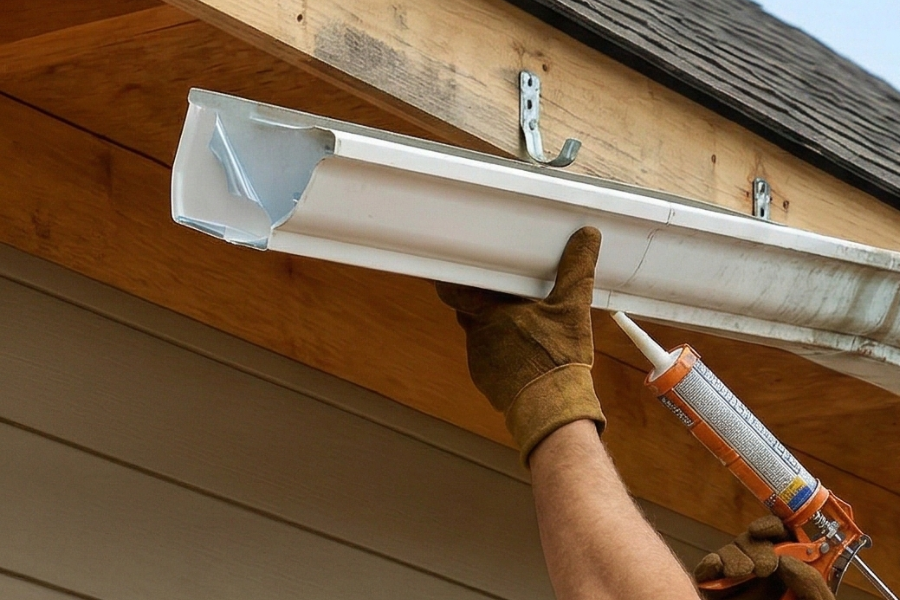
The housing stock across Hilton Head Island covers a wide range, and that range changes what a repair involves. Older properties in Sea Pines and Port Royal — many of them built in the 1970s and early 1980s — were typically installed with sectional gutter systems that have seams every ten feet. Those seams are the most vulnerable point in any gutter, and after decades of salt air exposure and thermal expansion from our summer heat cycles, virtually every seam on an older sectional system has either failed or is close. On these homes, what looks like a single leaking seam often points to a system that needs section-by-section evaluation rather than one-off patch repairs.
Newer construction along Buckwalter Parkway and in the Okatie corridor tends to have larger roof footprints with more complex hip and valley geometry. Those rooflines concentrate water at specific points, so downspout placement and sizing matter more than they do on simpler rooflines. We see undersized downspout runs on homes in these developments fairly often — the gutter is holding up, but the discharge point can’t move the volume fast enough during a heavy storm, and the overflow ends up against the foundation.
Homes in gated communities like Wexford and Indigo Run sometimes have HOA color or profile requirements for exterior components. We stock a range of aluminum coil colors and carry the standard K-style profiles, so matching the existing system on a partial replacement isn’t a problem on most jobs.
Safety and the DIY Line on Gutter Repairs
Homeowners ask us regularly whether certain gutter repairs are worth tackling themselves. The honest answer depends on what the repair actually involves. Reattaching a single loose spike on a one-story ranch is a reasonable weekend task if you’re comfortable on a ladder. But most repairs that look simple from the ground are more involved once you’re up there — and the risk profile changes fast on two-story homes, which are common throughout Hilton Head Plantation and the newer construction corridors in Bluffton. Falls from ladders are a leading risk.
The bigger issue is misdiagnosis. A homeowner who reseals a leaking seam without checking why the seam separated in the first place will be back on the ladder in one season. If the underlying cause is a hanger that has pulled loose or a pitch that has shifted, the sealant fails again because the two pieces of metal are still moving relative to each other. Getting the repair wrong once usually means paying to have it done right later, plus any damage that accumulated in the gap. We carry the right equipment, we do this every day, and we give you a straight read on what the repair actually requires before we start.
Questions We Hear From Hilton Head Homeowners About Gutter Repair
We Serve the Entire Lowcountry
Our crew works across the full region — Hilton Head Island, Daufuskie Island, Bluffton, Beaufort, Okatie, Hardeeville, and the communities in between. Whether you’re in a gated plantation on the island, a newer development off Buckwalter Parkway, or an older neighborhood near downtown Beaufort, we make the trip.
If you’re unsure whether you’re in our service area, just call — the answer is almost always yes.