
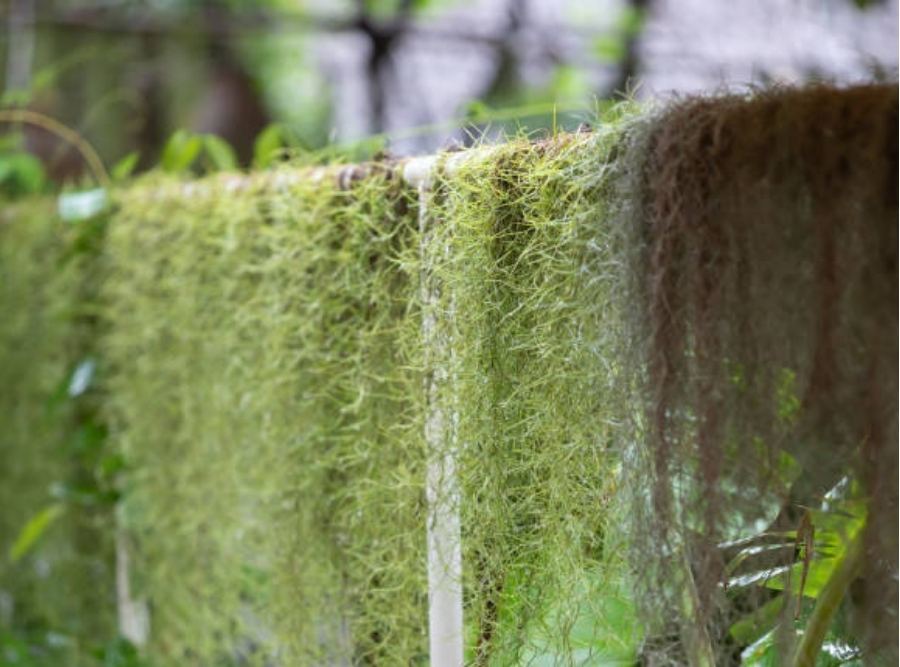
Spanish Moss in Your Gutters — What It’s Doing and How to Stop It
If you live in the Lowcountry, Spanish moss is part of the scenery.
It hangs from live oaks across Hilton Head. It drapes over trees in Bluffton. It lines roads in Beaufort and stretches across coastal Georgia communities like Savannah and Pooler.
It looks beautiful in the trees. It’s not so beautiful in your gutters.
Homeowners often notice gray strands collecting along the roofline or hanging over the edge of their gutters and wonder what’s happening. Then comes the question:
Is Spanish moss damaging my gutters? The short answer is yes, it can.
How Spanish Moss Ends Up in Gutters
Spanish moss doesn’t grow from your roof or gutter system. It falls from surrounding trees.
During wind, rain, or storms, strands break loose and land on your roof. From there, gravity and water carry it into the gutter trough.
Unlike leaves, Spanish moss doesn’t just sit loosely inside the gutter. It tangles. It wraps around other debris. It traps pine needles and small sticks. Over time, it forms a thick, fibrous mass that holds moisture.
That moisture retention is the real issue.
In humid regions like Bluffton and Hilton Head, gutters rarely dry out completely. When Spanish moss collects inside, it stays damp longer than typical debris. That constant moisture exposure accelerates corrosion and can stain fascia boards.
Why It’s a Bigger Problem in the Lowcountry
Spanish moss is unique to this region.
Homes in Beaufort, Port Royal, Hardeeville, and surrounding communities deal with it regularly because of the dense live oak canopy.
Add in:
- Coastal humidity.
- Frequent rainfall.
- Wind-driven storms.
- Year-round debris cycles.
And moss doesn’t just sit in the gutter, it becomes part of a compacted blockage.
Unlike dry leaves that may blow out, moss weaves into pine needles and roof granules. That creates a dense obstruction that slows water flow and increases the likelihood of overflow during storms.
When gutters overflow repeatedly, water can run behind the fascia, stain siding, and contribute to wood rot over time.
What Spanish Moss Is Actually Doing Inside the Gutter
When Spanish moss builds up inside the trough, it changes how water moves through the system.
Instead of flowing freely toward the downspouts, water hits the fibrous mass and slows down. As debris accumulates around it, the blockage becomes more solid.
Because moss holds moisture, it keeps the interior of the gutter wet longer after rainfall. That prolonged dampness increases the risk of corrosion, especially in coastal climates where salt air is already present.
Homes in Savannah, Pooler, Rincon, and Springfield experience similar conditions. Even properties slightly inland still deal with high humidity cycles that amplify the effects of trapped debris.
Over time, the combination of moss, pine needles, and moisture can shorten the lifespan of the gutter system.
Why Removing It Early Matters
Some homeowners ignore Spanish moss buildup because it doesn’t look as heavy as leaf debris.
The problem is what’s happening underneath it.
Moss acts like a net, catching smaller particles and compacting them into a denser blockage. The longer it sits, the more it traps.
Routine gutter cleaning removes moss before it has time to intertwine with other debris and create serious drainage issues.
If left unchecked, buildup can contribute to sagging sections or areas where water consistently spills over the edge.
Can Gutter Guards Prevent Spanish Moss Problems?
This is where proper protection matters.
Not all gutter systems are designed to handle fibrous debris. However, properly installed gutter guards can significantly reduce how much moss enters the gutter channel in the first place.
Instead of dropping directly into the trough, much of the debris remains on top and can be blown away or washed off gradually.
In pine- and oak-heavy neighborhoods across Hilton Head and Bluffton, guards often reduce the frequency of internal buildup.
They don’t eliminate maintenance completely, but they dramatically slow the accumulation of moss and the debris it traps.
For homes surrounded by live oaks — common throughout the Lowcountry, that added layer of protection can make a noticeable difference.
When to Have Your Gutters Checked
If you see gray strands hanging over the edge of your gutters or notice small clumps collecting along the roofline, it’s worth addressing.
- Overflow during storms.
- Dark streaking on the front of gutters.
- Water dripping behind the system.
- Visible debris packed inside.
These are all signs moss may be contributing to a blockage.
Because Spanish moss is specific to this region, homeowners sometimes underestimate its impact. But in the humid coastal environment, it behaves differently than in drier climates.
Routine inspection and cleaning keep minor buildup from turning into structural wear.
Spanish Moss Isn’t Just Cosmetic in Coastal Gutters
Spanish moss may be part of the Lowcountry’s charm, but it doesn’t belong in your gutter system.
When it collects inside the trough, it traps moisture, holds debris, and restricts water flow. In a humid coastal climate, that combination accelerates corrosion and increases the risk of overflow.
Regular gutter cleaning removes buildup before it becomes compacted. Installing properly selected gutter guards can reduce how often moss enters the system in the first place.
For homeowners across Hilton Head, Bluffton, Beaufort, and the surrounding coastal Georgia communities, managing Spanish moss is simply part of maintaining a home in this environment.