
Gutter Repair and Installation in Pooler, GA
Pooler’s growth brought rooflines builder-grade gutters often cannot handle, especially in Godley Station and Savannah Quarters, where tight valleys trap debris and stress drainage. With 20+ years of experience, Carolina Seamless Gutters serves homes from the airport corridor to Old Pooler off Hwy 80, installing properly sized systems.
The Gutter Problems That Come With Pooler’s Roofline Complexity
Old Pooler and New Pooler call for different gutter approaches. Brick ranches near Main Street and Hwy 80 mostly deal with aging seams, loose hangers, and live oak debris, and are usually straightforward to repair.
In Godley Station and Savannah Quarters, steep Craftsman rooflines and multiple gables create high runoff and debris-heavy valleys. When those clog, water backs up under shingles before it reaches the gutter.
What a Dead Valley Actually Does to a Gutter System
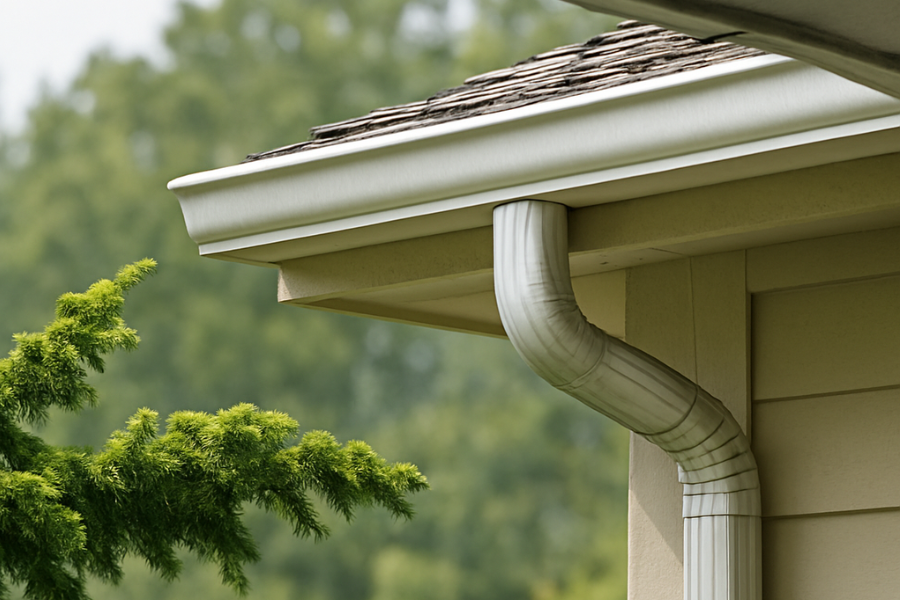
A dead valley is a low-slope intersection where two roof planes meet and water drains slowly. On Pooler’s newer multi-gable homes, pine needles and oak debris collect there first, forming a mat that dams water and forces it under shingles or over the gutter edge.
We see this most often in Forest Lakes and shaded sections of Pine Ridge, where dense canopy keeps valleys damp between storms. By the time you notice soffit staining or water running down the wall, debris has usually been building through multiple storm cycles.
How Spanish Moss Stresses Hangers Differently Than Other Debris
Most debris issues in Pooler are simple blockages, but windblown Spanish moss creates a different kind of stress. Moss holds water like a sponge and adds weight rather than volume, which can slowly pull hanger screws from softened fascia without causing visible overflow. We see this most often under mature oak canopy in communities like Savannah Quarters and Hamilton Grove.
Homeowners usually notice sagging before they understand the cause. If a gutter run has shifted or pulled forward after a storm, moss loading is one of the first things we check. If something looks off, it is worth getting it inspected before the next storm cycle.
How Pooler Homeowners Usually Start the Conversation
Calls from Pooler tend to come in three situations. Something failed visibly during a storm — overflow at a valley, a section pulling from the fascia, or water tracking down the exterior wall in the wrong place. A home sale or HOA review is coming up and the gutter color or condition needs to match what Savannah Quarters or Godley Station requires. Or a homeowner has been watching a minor problem for a season and decided to get ahead of it before hurricane season opens.
We walk the full roofline, check fascia and soffit condition while we’re up there, and give a plain read on what’s working and what isn’t. For HOA communities like Savannah Quarters where specific colors — Bronze, Royal Brown, or Low-Gloss White — are required to match trim packages, we confirm what’s approved before anything is ordered. The crew that estimates the job is the crew that does the work.Free estimates, no obligation.
Call (843) 310-0288 and we’ll get you on the schedule.
Why Pooler’s Soil and Humidity Turn Small Problems Into Expensive Ones
Most of Pooler sits on low-lying Coastal Plain soil — a geology that doesn’t absorb concentrated runoff the way higher-elevation markets do. When gutters back up and water exits at the foundation repeatedly, it doesn’t disperse. It pools, it undermines, and over time it creates conditions for slab settling that homeowners in higher-ground markets rarely have to think about. Foundation settling in Pooler is a more common outcome of neglected drainage than most people realize when they buy here.
The humidity compounds the fascia problem faster than it would in a drier climate. Georgia’s summer months run at 90% relative humidity for weeks at a time. A fascia board that takes a clog event and stays damp against it isn’t drying out between storms — it’s wicking moisture progressively further behind the gutter. By the time the gutter is visibly separating from the roofline, the wood driving it has usually been compromised longer than the gap suggests.
Clogged gutters in Pooler’s suburban neighborhoods also become mosquito and palmetto bug breeding grounds faster than most homeowners expect. Standing water in a partially blocked gutter channel is ideal habitat for both — and in a city where both are already prolific, an untreated clog adds to a pest problem that exists independently of the drainage issue.
Getting a gutter system assessed before hurricane season opens is consistently the lower-cost decision.
Gutter Services Across Pooler, GA
Carolina Seamless Gutters handles the full range of what Pooler homes need — from Old Pooler ranch systems to complex multi-gable new builds in Godley Station and Savannah Quarters. Every job is handled by our own crew.
Seamless Gutter Installation
Formed on-site to the exact length of your roofline — no joints, no seams along the run. For most Pooler new builds we recommend 6-inch K-style systems. For HOA communities, we confirm approved colors and finishes first.
Gutter Repair
Sagging runs, hanger separation, leaking corners, gutters pulling from fascia — we fix what’s actually failing. On homes where moss loading or humidity has softened the wood behind the gutter, we tell you what that involves before any repair work begins.
Gutter Guards & Gutter Covers
We install Leafblaster, Leaf Sentry, and Xtreme Gutter Guard systems. Pooler’s spring pollen turns to mud in rain and seals cheap mesh guards quickly. We match the system — and we’ll tell you plainly if guards aren’t the right answer for your property.
Downspout Installation & Repair
On Pooler’s low-lying Coastal Plain soil, where water exits at the foundation matters significantly. We size and position downspouts to move water well clear of the slab — not just off the roofline — and look at exit routing on every assessment.
Gutter Cleaning
Most Pooler homes need cleaning at least twice a year — after spring pollen and catkin season, and before hurricane season opens in June. Homes under heavy pine or live oak canopy in Forest Lakes or Pine Ridge often need three to four annually.
Galvalume Gutters
For larger homes in Savannah Quarters and the Godley Station communities where long-term durability matters, Galvalume holds up significantly better than standard aluminum in Coastal Georgia’s humidity. Worth considering on any property when replacing gutters.
Commercial Gutters
Heavy-duty systems for larger buildings across Pooler and the broader Chatham County area. Commercial rooflines move substantially more water volume and require systems sized and anchored differently than residential work.
Old Pooler, New Pooler, and What Each One Needs From a Gutter System
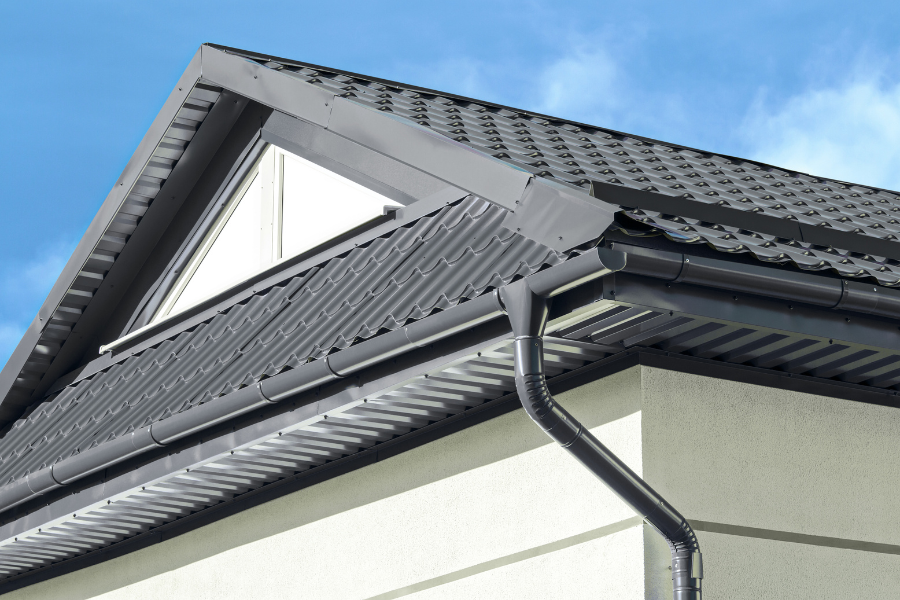
The divide between Old Pooler and New Pooler creates two very different gutter conversations. Brick ranches near Main Street and the Hwy 80 corridor have simple rooflines with long straight runs, where the problems are aging sectional seams, loose hangers, and constant debris from mature live oaks. These homes are often strong candidates for a straightforward seamless upgrade, since simpler rooflines mean fewer long-term failure points.
Newer Craftsman and Coastal Traditional homes in Godley Station, Somersby, and Clearwater Station require more intentional system design. Steep pitches, multiple gables, and tight valleys demand proper sizing and strategic downspout placement, and communities like Savannah Quarters add HOA color and compliance requirements that must be confirmed before installation.
Near Tom Triplett Community Park and along Pooler Parkway, newer townhome developments present a third scenario. Smaller footprints and shared drainage patterns concentrate runoff differently, requiring property-specific evaluation rather than standard builder sizing.
Proudly Serving Hilton Head Island Communities
Carolina Seamless Gutters provides gutter and roofing services across Hilton Head Island’s most established neighborhoods and residential communities. From roof replacement and repairs to seamless gutter installation and protection systems, we serve homeowners throughout HHI with solutions built for coastal wind, humidity, and salt air conditions.
Questions We Hear from Pooler Homeowners
Have a question not covered here? Contact us — we’re easy to reach and happy to talk through your situation before you commit to anything.