
Gutter Repair and Installation in Savannah, GA
Savannah’s rooflines and coastal soil create gutter demands that range from Historic District copper profiles to canopy-heavy neighborhoods and salt-exposed Island homes. With 20+ years of experience, Carolina Seamless Gutters installs properly sized systems across Savannah to prevent overflow, corrosion, and settling.
Four Parts of Savannah, Four Different Gutter Conversations
Most cities have one housing type that defines gutter work, but Savannah has several, and where your home sits determines the right system, material, and maintenance plan.
In the Historic and Victorian Districts, MPC rules often require period-appropriate half-round profiles, making compliance as important as performance. South of Derenne, neighborhoods like Windsor Forest and Georgetown deal with aging or undersized systems under dense live oak canopy that overwhelms standard cleaning schedules.
What Live Oak Debris Does That Other Trees Don’t
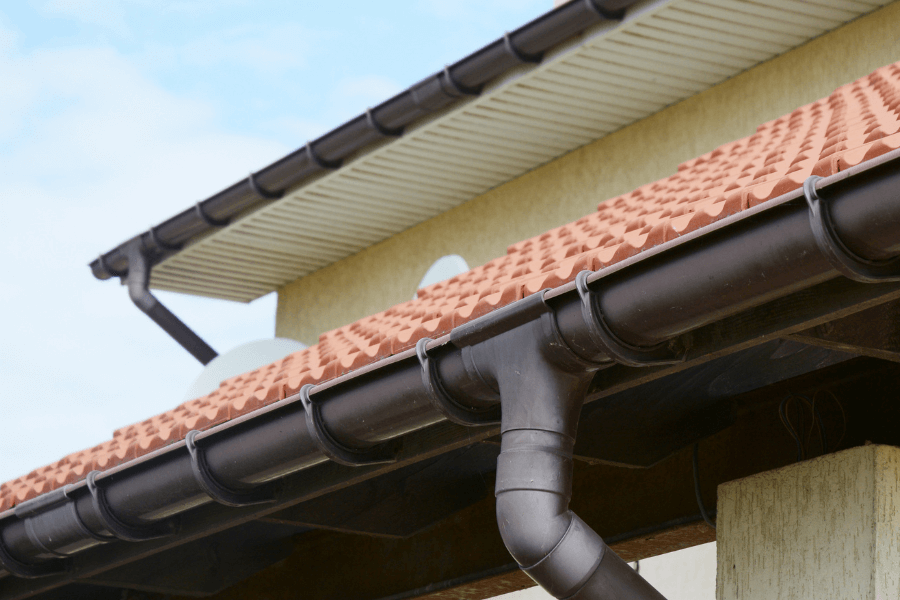
Ardsley Park and Kensington Park sit under some of the largest live oak canopies in Chatham County, and that debris behaves differently than pine straw. Live oak leaves settle into the gutter channel, hold moisture, and compress into a dense sludge that bonds to the gutter floor, while windblown Spanish moss lands on top and adds heavy, waterlogged weight that stresses hangers.
The buildup often looks manageable from the ground but has usually been forming for multiple seasons. By the time you see water spilling over the front edge, the sludge layer is often deep and the fascia behind it may have been soaking up moisture longer than the overflow suggests.
Salt Air Corrosion on the Islands
Wilmington Island, Whitemarsh Island, and Tybee Island sit in constant salt air that pits aluminum and rusts standard steel fasteners far faster than homes inland. On Skidaway Island, especially in communities like The Landings, complex Lowcountry rooflines concentrate runoff in valleys while corrosion is already working on the hardware, so problems compound quickly.
For homes near tidal water, stainless fasteners and Galvalume are often the right spec, and we check attachment points on every Island estimate. If a gutter run is pulling away from the roofline, fastener corrosion is usually the first place to look.
How Savannah Homeowners Usually Get Things Sorted
Savannah calls come from a wider range of situations than most markets. Historic District homeowners reach out when something fails and they need MPC-compliant replacement work, Island homeowners call after storms when salt exposure has worked through fasteners, and canopy-heavy areas like Ardsley Park and Windsor Forest often call after fascia damage or soffit staining shows up.
We walk the full roofline, check fascia and soffit condition, and give a plain read on what is working and what is not. We confirm MPC profiles and materials before ordering, and on Island properties we flag corrosion and coating issues during the estimate, not mid-job.
Free estimates, no obligation. Call (843) 310-0288 or fill out the form below to get on the schedule.
Why Savannah’s Soil and Humidity Make Gutter Problems Urgent
Much of Savannah is built on dredge fill and soft coastal soil — the same geography that makes the city’s low-lying character so distinctive also makes foundation drainage a more serious concern than it is in most Georgia markets. When gutters back up and water repeatedly pools near the slab, it doesn’t absorb and disperse. It loads the soil, it undermines it, and over time it creates the conditions for slab settling and the cracked drywall that follows. Foundation repair in Savannah is expensive in part because the soil conditions that caused the problem don’t change.
The humidity compounds the wood problem faster than most people expect. Savannah runs at 90% relative humidity through the summer months, and a fascia board that takes a clog event doesn’t dry out between storms — it stays damp, it wicks moisture progressively further behind the gutter, and it creates the soft, damaged wood that Formosan subterranean termites — a documented major presence in Chatham County — are specifically drawn to. A gutter pulling from the roofline in Savannah isn’t just a drainage problem.
The pluff mud issue adds another layer specific to this city. Downspouts that discharge too close to the foundation in Savannah’s soil mix don’t just cause surface erosion — the combination of rain and coastal soil creates a sludge that can block underground drainage pipes entirely, turning a surface drainage problem into a buried one that’s significantly harder to diagnose and fix.
Getting a system assessed before the summer storm season opens is consistently the lower-cost decision in this market.
Gutter Services Available in Savannah, GA
Carolina Seamless Gutters handles the full range of what Savannah homes need — from MPC-compliant copper profiles in the Historic District to salt-resistant systems on the Islands. Every job is handled by our own crew.
Seamless Gutter Installation
Formed on-site to the exact length of your roofline — no joints, no seams along the run. For most Savannah homes we recommend 6-inch K-style aluminum. For Historic District and Victorian District properties, we work in copper and aluminum half-round profiles with round downspouts to meet MPC requirements.
Gutter Repair
Sagging runs, corroded fasteners, leaking corners, gutters separating from fascia — we fix what’s actually failing. On Island properties where salt air has been working on fasteners, and on Historic District homes where original wood trim is involved, we tell you what we find before any work begins.
Gutter Guards & Gutter Covers
We install Leafblaster, Leaf Sentry, and Xtreme Gutter Guard systems. Savannah’s live oak sludge and spring pine pollen mud challenge most standard guard systems — we match the product to your specific canopy and debris load rather than recommending one system for every property.
Downspout Installation & Repair
On Savannah’s dredge fill and soft coastal soil, where water exits at the foundation matters more than in most markets. We size, position, and extend downspouts to move water well clear of the slab — and flag underground drainage issues when we see signs of pluff mud blockage.
Gutter Cleaning
Most Savannah homes need cleaning at least twice a year — after spring pollen and oak tassel season, and before summer storms ramp up. Homes under heavy live oak canopy in Ardsley Park, Chatham Crescent, and Parkside often need three to four annually.
Galvalume Gutters
For Island properties on Wilmington Island, Tybee, and Skidaway where salt air exposure is consistent, Galvalume holds up significantly longer than standard aluminum. Worth considering on any coastal property where the system is being replaced rather than repaired.
Commercial Gutters
We deliver heavy-duty systems for larger buildings across Savannah and Chatham County. Commercial rooflines move substantially more water volume and require systems sized and anchored differently than residential work.
Savannah’s Four Housing Types and What Each Needs From a Gutter System
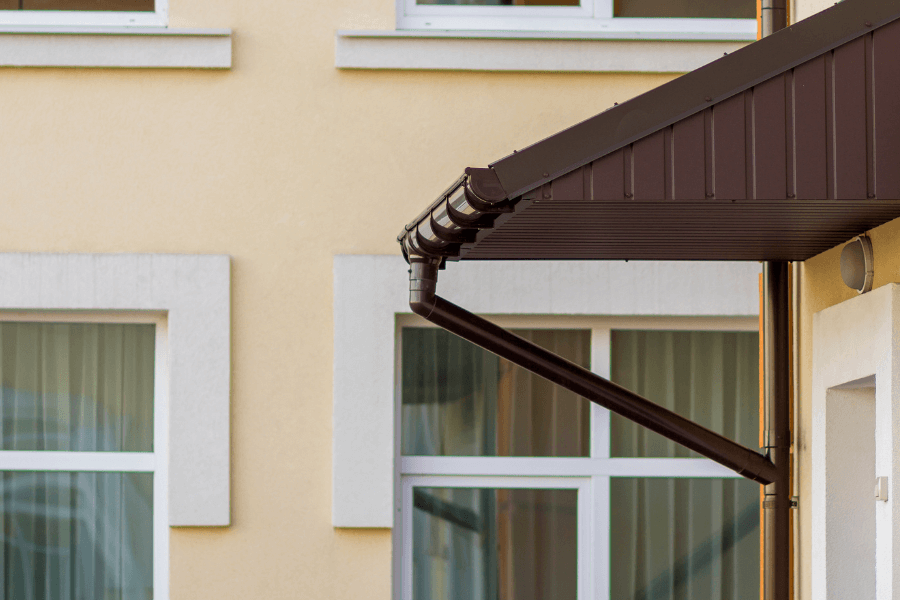
Savannah’s housing stock is wider than most markets, and the right gutter system depends on where you live in the city.
The Historic and Victorian Districts are the most constrained, with the Metropolitan Planning Commission (MPC) enforcing period-appropriate profiles. Copper or aluminum half-round gutters with round downspouts are typical here, and confirming compliance is the first step on any downtown estimate.
Mid-century ranch neighborhoods like Ardsley Park, Windsor Forest, and areas along Victory Drive often still run 5-inch K-style systems under dense live oak canopy, where debris load is high and capacity is low. Upgrading to 6-inch seamless makes a measurable difference during Savannah’s hardest summer storms.
Island homes on Skidaway, Wilmington, and Whitemarsh combine complex valleys with salt exposure, so installs need both proper downspout design and corrosion-resistant materials and fasteners. Southside areas like Georgetown and Coffee Bluff are usually simpler rooflines, but the soft coastal soil drainage issue still matters just as much.
Proudly Serving Hilton Head Island Communities
Carolina Seamless Gutters provides gutter and roofing services across Hilton Head Island’s most established neighborhoods and residential communities. From roof replacement and repairs to seamless gutter installation and protection systems, we serve homeowners throughout HHI with solutions built for coastal wind, humidity, and salt air conditions.
Questions We Hear from Savannah Homeowners
Have a question not covered here? Contact us — we’re easy to reach and happy to talk through your situation before you commit to anything.