
Gutter Repair and Installation in Springfield, GA
Springfield, in the heart of Effingham County near Ebenezer Creek, faces heavy pine debris, high humidity, and stalling summer storms that punish gutters fast. With 20+ years of experience, Carolina Seamless Gutters serves Springfield with systems sized for real runoff and debris load.
What Springfield’s Timberland and Wetland Setting Does to a Gutter System
Most suburban clogs come from yard trees, but Springfield also takes year-round pine needle load from surrounding managed timberland. That debris is constant, not seasonal, and it builds in a way many standard gutter guards are not designed to handle.
Humidity from Ebenezer Creek and nearby wetlands also stays elevated under canopy, so gutters, fascia, and soffit dry slower between storms. When a minor clog happens, the moisture lingers longer and the damage builds faster than it would in a sunnier, drier market.

How Pine Straw Mats Block Gutters Differently Than Other Debris
Long-leaf pine needles don’t behave like oak leaves or short pine needles. They’re long, flexible, and interlocking — they weave together under moisture pressure into dense, heavy mats that conform to the shape of the gutter channel. Those mats don’t flush out in rain the way looser debris does. They compress further with each wet cycle and eventually become dense enough that water flows over the top rather than through the system.
Standard screen guards accelerate the problem. Needles bridge across the guard surface and form the same mat above the channel, shedding water to the ground below. By the time a homeowner in Springfield Plantation or along the Stillwell-Clyo corridor notices overflow, the mat has usually been building through several storm cycles.
Pollen Paste and the Downspout Opening Problem
Springfield’s spring pollen drop is heavy enough to coat surfaces visibly, and in gutters it creates a specific failure point that most homeowners don’t think to check. Pollen mixes with light rain in the gutter channel and forms a sticky paste that migrates toward the lowest point — which is the downspout opening. That paste seals the opening from the inside, and the symptom is a gutter that appears clear but drains slowly or not at all during a rain event.
A gutter cleaning after pollen season that doesn’t include flushing and checking the downspout opening misses the problem entirely. We flush every downspout on every cleaning visit specifically because of this pattern.
If your gutters fill up during rain but drain slowly after it stops, a sealed downspout opening is the most likely cause.
How Springfield Homeowners Usually Get Things Sorted
Calls from Springfield usually come from three directions. Historic homeowners near the Courthouse and Mars Theatre call when gutters on wood-frame homes start pulling away from soft fascia, suburban neighborhoods like Ulmer Village and Laurelwood call after foundation washout or siding stains, and rural properties toward Clyo and Berryville call when an older system finally fails during a summer storm.
We walk the full roofline, check fascia and soffit condition, and give a plain read on what is working and what is not, and on historic trim we confirm what the system is actually anchored to before recommending repairs. The crew that estimates the job is the crew that does the work.
Free estimates, no obligation. Call (843) 310-0288 and we’ll get you on the schedule.
Why Springfield’s Environment Turns Gutter Problems Into Structural Ones
The combination of sandy-clay soil and concentrated runoff creates a foundation consequence specific to Springfield that isn’t as common in harder-soil markets. When gutters back up and water exits at the roofline rather than through a properly extended downspout, it doesn’t just pool near the slab — it carves a channel through the sandy-clay perimeter. That trenching pattern deepens with each storm cycle, and on homes with attached porches, the soil displacement eventually causes the porch structure to pull away from the main foundation. It’s one of the more expensive outcomes of a gutter problem that could have been addressed early.
The Swamp Effect compounds wood damage faster than most Springfield homeowners expect. Ebenezer Creek and the surrounding wetland system keep the air under heavy canopy consistently humid — significantly more so than the open areas of Effingham County. A fascia board that gets wet and stays under that canopy doesn’t dry between rain events the way it would in a sunnier spot. Carpenter ants are the first pest consequence of soft, damp wood in this environment — they move into compromised fascia quietly, and by the time they’re visible the damage has usually been building for a full season.
Once the fascia softens far enough, squirrels and birds treat it as an opening. Attic entry through a rotted soffit panel is a routine outcome in Springfield’s more heavily wooded neighborhoods — Shadowbrook, Springfield Plantation, and the streets backing up to timberland on the Hwy 119 corridor — when gutter maintenance has been deferred too long.
Getting a system assessed before the summer storm season opens is the most reliable way to stay ahead of these consequences.
Gutter Services Available in Savannah, GA
Carolina Seamless Gutters handles the full range of what Springfield homes need — from historic wood-frame properties near the Courthouse to rural acreage homes and newer subdivisions along the growth corridors. Every job is handled by our own crew.
Seamless Gutter Installation
Formed on-site to the exact length of your roofline — no joints, no seams along the run. For most Springfield homes we recommend 6-inch K-style systems to handle the volume from stagnant summer storms. On historic Folk and Victorian homes with complex rooflines, we assess the trim and fascia condition before recommending profile and sizing.
Gutter Repair
Sagging runs on older sectional systems, hangers pulling from softened fascia, leaking seams, gutters separating from wood trim — we fix what’s actually failing. On homes where the fascia has already softened from moisture exposure, we tell you what that involves before any gutter work is ordered.
Gutter Guards & Gutter Covers
We install Leafblaster, Leaf Sentry, and Xtreme Gutter Guard systems. Standard screen guards fail quickly under Springfield’s long-leaf pine needle load — needles bridge across the surface and mat above the channel. We match the system to your actual debris load and to managed timberland needle fall.
Downspout Installation & Repair
In Springfield’s sandy-clay soil, where water exits at the foundation determines whether runoff stays manageable or begins trenching the perimeter. We position and extend downspouts to move water well clear of the foundation — and check downspout openings for pollen paste blockage on every visit.
Gutter Cleaning
Most Springfield homes need cleaning at least twice a year — after spring pollen season and again before the summer storm window. Homes under heavy pine canopy or bordering managed timberland often need three to four.
Galvalume Gutters
For larger rural homes and properties in the Savannah River Basin corridor where sustained humidity accelerates standard aluminum wear, Galvalume holds up significantly longer.
Commercial Gutters
Heavy-duty systems for larger buildings across Springfield and Effingham County. Commercial rooflines move substantially more water volume and require systems sized and anchored differently than residential work.
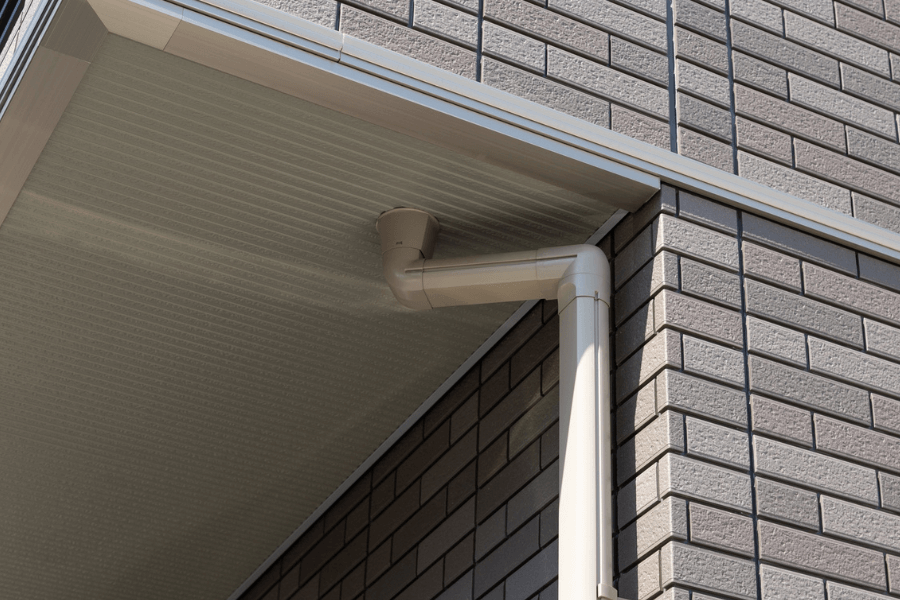
Springfield’s Housing Stock and What Each Type Needs
In Springfield, gutter needs change fast between in-town historic homes and the suburban or rural outskirts. Where the home sits usually determines whether the priority is trim protection, drainage control, or full runoff management.
Historic homes near the Effingham County Courthouse and Mars Theatre are the most maintenance-intensive, steep roofs and deep porches push water fast, and older sectional gutters often leak at seams or loosen under pine straw weight. On these properties, proper sizing and solid attachment matter as much as cleaning.
Suburban areas like Ulmer Village and the Hwy 119 corridor are simpler structurally, but slab foundations on sandy-clay soil make downspout extensions critical to prevent trenching and perimeter washout. Farther out in rural areas, larger roof footprints and longer drainage runs amplify debris buildup, and homes without complete gutter coverage often show visible porch and foundation damage over time.
Proudly Serving Hilton Head Island Communities
Carolina Seamless Gutters provides gutter and roofing services across Hilton Head Island’s most established neighborhoods and residential communities. From roof replacement and repairs to seamless gutter installation and protection systems, we serve homeowners throughout HHI with solutions built for coastal wind, humidity, and salt air conditions.
Questions We Hear from Springfield Homeowners
Have a question not covered here? Contact us — we’re easy to reach and happy to talk through your situation before you commit to anything.